
The short answer
Your garage door is almost certainly the largest, least reinforced opening in your home's exterior, and it's engineered differently than a solid wall. When wind pressure builds during a storm, a door that's old, improperly braced, or missing wind-rated hardware can buckle or blow in first — and once that happens, the wind gets inside the structure and pushes up on the roof from underneath. Preparing the door before storm season peaks isn't optional maintenance; it's structural defense for the whole house.
Why the garage door fails before anything else
A wall is a continuous, braced surface. A garage door is a large panel held in place by tracks, rollers, hinges, and a spring system, with the whole assembly counting on the bottom seal and the track connection to the frame to resist pressure. In high wind, two things happen at once: direct force pushes against the door's face, and pressure differences inside versus outside the garage try to suck the panels outward or push them inward. Older doors, doors with worn rollers, or doors that were never rated for wind load in this region are the first failure point in a lot of storm damage reports, which is why hurricane-prone areas like South Florida have wind-load standards for garage doors in the first place.
Add in what the climate does to the hardware year-round — salt air near the coast accelerating rust, humidity swelling wood panels, and heavy afternoon downpours keeping tracks and seals wet more often than not — and you've got a door that may be weaker than it looks even before a storm shows up.
Signs your door won't hold up
- Visible rust on hinges, track bolts, or the bottom bracket — a sign that metal has been thinning for a while
- Panels that flex or bow noticeably when the door is closed and you push on them
- Track bolts or wall brackets that are loose, bent, or pulling away from the frame
- A bottom seal that's cracked, flattened, or no longer sitting flush against the slab
- An opener that struggles, reverses, or seems to strain more than it used to
Any one of these is worth addressing now, not after the next storm watch is issued.
What actually makes a difference before a storm
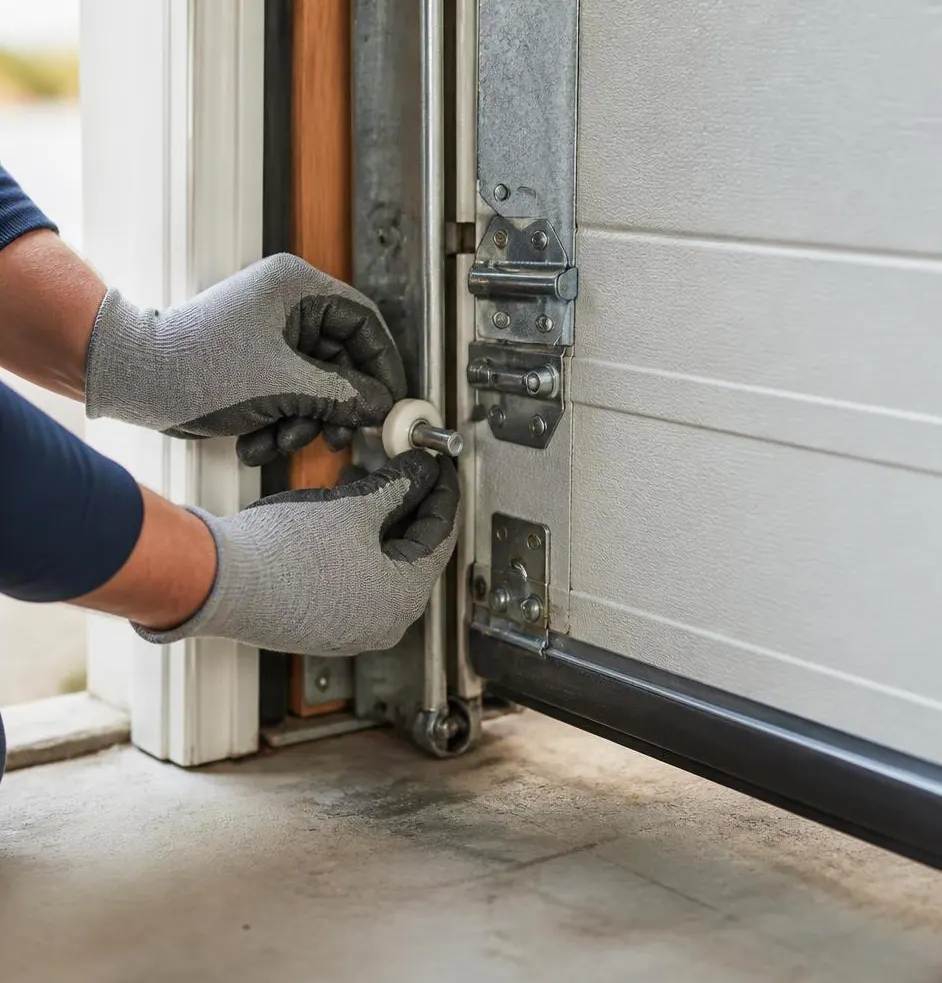
- Check and tighten hardware. Track brackets, hinges, and roller bolts loosen over time from vibration and humidity swings. A technician going panel by panel catches what a quick glance misses.
- Inspect for wind-rated bracing. Some doors have horizontal struts bolted to the back of each panel specifically to resist wind load. If yours doesn't have them, or they're not installed correctly, that's a gap worth closing before storm season peaks.
- Replace corroded parts, don't just treat the rust. Surface rust on hinges or track bolts near the coast often means thinning metal underneath. Painting over it doesn't restore strength — the part needs replacing.
- Service the springs. Springs under tension are already doing hard work daily; add storm-force wind cycling the door open and shut from pressure changes, and a weak spring is far more likely to snap at the worst time.
- Test the opener's backup. Power outages are common during and after storms. A battery backup on the opener means you're not stuck trying to manually lift a heavy door in the rain.
- Clear and lubricate tracks. Humidity and afternoon downpours leave grit and moisture in the tracks, which makes the door bind under stress. A clean, lubricated track lets the door move the way it's supposed to, with less strain on the opener and hardware.
If you're due for a new door
If your current door is more than 15–20 years old, was installed before wind-load standards were common in this area, or shows repeated hardware failures, replacement may be the more cost-effective move rather than continuing to repair an aging system. New garage doors built for wind resistance typically run from the low thousands to several thousand dollars depending on size, material, and bracing — a wide national range, but it reflects the real difference between a basic panel door and one engineered to handle storm-force pressure.
When to call Miami Gardens Garage Door
If you've spotted rust, flex in the panels, a sagging seal, or you're simply not sure your door was ever rated for wind load, that's the time to get it looked at — not after a storm's already in the forecast. Our team handles spring replacement and full garage door installation for homeowners who need a wind-rated upgrade, along with hardware inspections and tune-ups for doors that just need reinforcing. We work throughout Miami Gardens, Opa-locka, Carol City, Miramar, Pembroke Pines, Hialeah, North Miami Beach, and Country Club.
Don't wait for a wind advisory to find out your garage door is the weak point. Call Miami Gardens Garage Door today for a storm-readiness inspection and get it handled before the next system rolls in.